
Body contouring is a group of cosmetic procedures designed to improve body shape by removing excess fat, tightening loose skin, or reshaping specific areas of the body. Many people consider these procedures when diet and exercise alone do not achieve their desired body shape.
Body Contouring in Iran has become an option for international patients exploring cosmetic surgery abroad. Iran offers a range of plastic and cosmetic surgery services, but choosing the right surgeon, understanding the available procedures, and evaluating medical safety are essential steps before making a decision.
In this guide, we explain the main body contouring procedures, their potential benefits, recovery expectations, cost considerations, and important safety factors for patients considering treatment in Iran.
What Is Body Contouring?
Body contouring refers to surgical and non-surgical procedures that improve the appearance and proportions of the body.
Surgical procedures may remove localized fat deposits or excess skin, while non-surgical techniques may use energy-based technologies to target selected areas of fat or improve skin appearance.
Body contouring is not primarily a weight-loss treatment. Instead, it is generally intended for people who are relatively close to their target weight but have specific areas they would like to reshape.
The most appropriate procedure depends on several factors, including body composition, skin elasticity, medical history, previous surgeries, and personal expectations.
Popular Body Contouring Procedures in Iran
Patients considering Body Contouring in Iran may be evaluated for several different procedures. Each technique has a specific purpose, and not every patient is suitable for every option.
1. Liposuction
Liposuction is a surgical procedure that removes localized fat deposits using a thin cannula connected to a suction system.
It may be performed on areas such as:
- The abdomen
- The waist and flanks
- The thighs
- The upper arms
- The back
- The chin and neck
Liposuction can improve body proportions by reducing selected fat deposits. However, it does not treat obesity and is not a substitute for a healthy lifestyle.
The final result depends on factors such as skin elasticity, the amount of fat removed, healing, and the patient’s overall health.
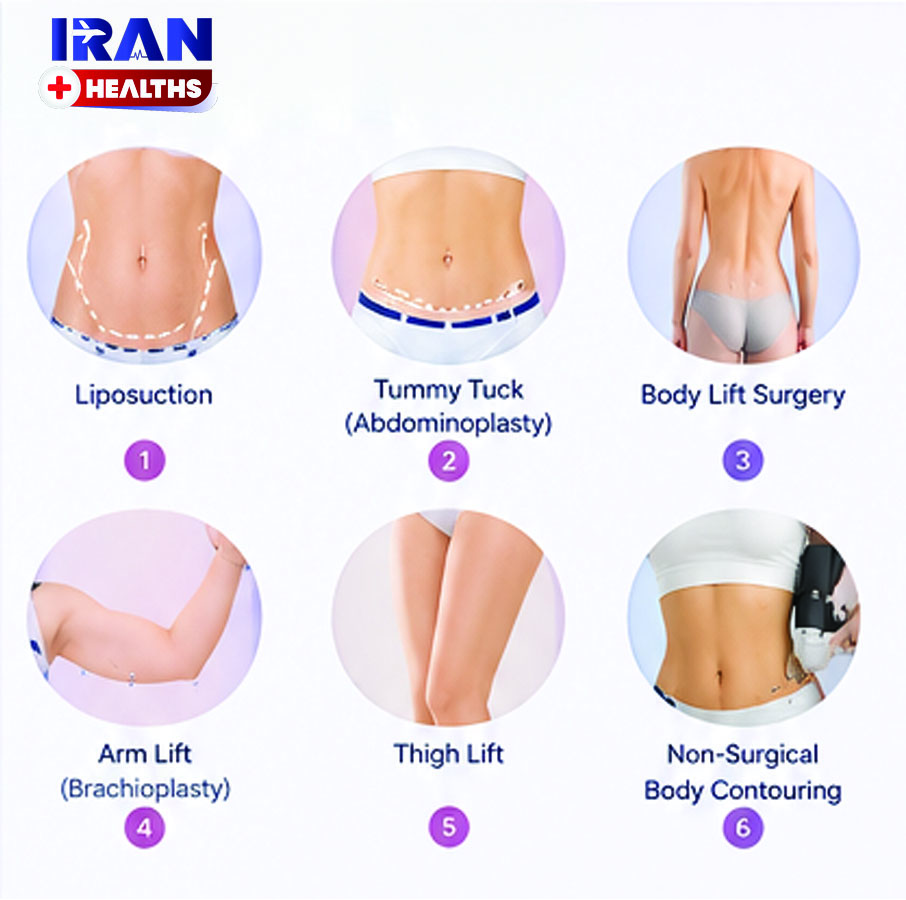
2. Tummy Tuck (Abdominoplasty)
A tummy tuck, medically known as abdominoplasty, is a surgical procedure that removes excess abdominal skin and may include tightening separated abdominal muscles when appropriate.
It may be considered by people who have loose skin following significant weight loss or pregnancy.
Unlike liposuction, a tummy tuck primarily addresses excess skin and abdominal contour. It involves an incision and generally requires a longer recovery period than liposuction alone.
The surgeon should explain the expected scar, potential complications, and whether the procedure is appropriate for the patient’s goals.
3. Body Lift Surgery
Body lift surgery may be considered for patients with substantial excess skin, particularly following major weight loss.
Depending on the patient’s needs, a lower body lift may address areas around the abdomen, hips, buttocks, and thighs.
Because these procedures can be extensive, careful medical assessment and planning are particularly important. Some patients may require staged procedures rather than having multiple operations at the same time.
4. Arm Lift and Thigh Lift
An arm lift, or brachioplasty, removes excess skin from the upper arms. A thigh lift removes excess skin and reshapes selected areas of the thighs.
These procedures may be appropriate when loose skin remains after weight loss or develops with aging.
Although they can improve body contours, both procedures may leave visible scars. Patients should discuss scar placement, healing, and realistic expectations with their surgeon.
5. Non-Surgical Body Contouring
Non-surgical body contouring includes selected treatments that use technologies such as cryolipolysis, radiofrequency, or other energy-based methods.
These treatments may provide modest improvements in localized fat deposits or skin appearance, depending on the technology and the patient’s characteristics.
They generally do not produce the same results as surgery for significant excess skin. Patients should also understand that non-surgical procedures have their own limitations and potential adverse effects.
A qualified healthcare professional can help determine whether a surgical or non-surgical approach is more appropriate.
Who Is a Suitable Candidate for Body Contouring?
Suitability for Body Contouring in Iran should be determined through an individual medical consultation rather than based solely on photographs or online assessments.
Potential candidates are generally people who:
- Are at or near a stable, healthy weight.
- Have localized fat deposits or excess skin that they would like to address.
- Have realistic expectations about the possible results.
- Are medically fit for the proposed procedure.
- Understand the recovery process and potential risks.
- Can follow postoperative instructions and attend necessary follow-up appointments.
Smoking, certain chronic medical conditions, previous blood clots, and some medications may increase surgical risks.
Patients should provide a complete medical history, including current medications, allergies, previous operations, and any history of blood clots or bleeding problems.
People planning significant weight loss or pregnancy may be advised to postpone certain procedures until their circumstances are more stable.
Why Consider Body Contouring in Iran?
Iran is one of the countries considered by international patients seeking cosmetic surgery.
For some patients, Body Contouring in Iran may offer access to different surgical options and medical tourism support services, depending on the selected surgeon, hospital, and location.
Potential considerations include:
- Access to plastic and cosmetic surgery specialists.
- Different surgical techniques tailored to individual needs.
- Assistance with medical consultations and treatment coordination.
- Opportunities to combine medical appointments with travel arrangements.
- The possibility of comparing treatment plans and total costs.
However, patients should not choose a surgeon based on price or promotional claims alone.
The surgeon’s qualifications, the operating facility’s authorization, anesthesia arrangements, emergency preparedness, and postoperative care should all be evaluated before proceeding.
Medical tourism arrangements should also account for the time required for recovery and the possibility that complications may require additional medical attention.
Medical References : Aesthetic Plastic Surgery
You can see other health care services provided in IranHealth via this link!

